

I was recently discussing with a comrade (yes, that’s what I call my friends) how much the historical narration that we, the common public internalise as gospel truth is dependent on how our school textbooks were written. Before being ‘conscious’ as we often say in leftist circles I too was naïve enough to believe that history was objective and free of ideology or ‘isms.’
But textbooks are not innocent. Our education curriculum quietly shapes the lens through which we see the world. As children, we were told to memorise history and we did. Whether that was the right way to learn is another debate altogether (haha, I can imagine the sighs here!) .What matters here is this- memory like history, is never neutral. Can it ever be?
We are, after all, products of our social environment. Our storytelling whether in personal anecdotes or national histories is influenced and even manufactured. More often than not, it reflects the story of power- the victor, the conqueror, the dominant class.
As Orwell reminded us, ‘Who controls the past controls the future. Who controls the present controls the past.’
This is what makes memory political. It isn’t merely about what happened; it is about what is remembered, and equally, what is forgotten- and the latter remains hidden beneath.
Memory as a Political Tool
Some readers may wonder am I not making a big deal out of all this? Doesn’t this happen everywhere, in every country that power writes its own version of history? I agree. But I trying to be ‘revolutionary’ (not an urban naxal, mind you 😉), still wants to question it. Yes, it happens but is this the correct approach? Should we just accept it and move on?
The real world is not black and white it is mostly grey. So why not move towards that? Why not allow space for contradictions? Why not let writers, academicians, film-makers or better, the new-age content creators in the socio-political space narrate history from multiple perspectives?
Memory, mind you is never accidental. It is curated. Carefully manufactured by the propaganda machine of the ruling dispensation whichever ideology it belongs to. And it’s not just textbooks. Look around:
State ceremonies
Framed photographs in government offices
Official holidays
The movies we celebrate in mainstream culture
All of them reinforce, day after day the institutional bias of those in power.
Let me ask you a simple question. What do you remember about Dr. B.R. Ambedkar from your textbooks? Constitution-maker? Dalit leader? Sure. But how many of us were told he had multiple PhDs, that he wrote The Problem of the Rupee, studied anthropology, wrote Annihilation of Caste, and literally set fire to the Manusmriti? That Ambedkar never makes it to our memory.
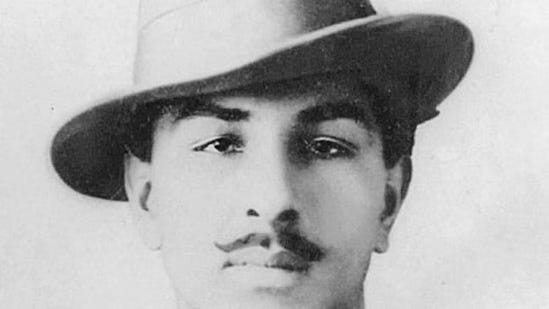
And Bhagat Singh? We recall “Inquilab Zindabad” and his martyrdom. But do we remember the thinker, the reader, the essayist? He wrote Why I Am an Atheist, studied Marx and Lenin, and even started youth organisations that still survive. But that part is forgotten.
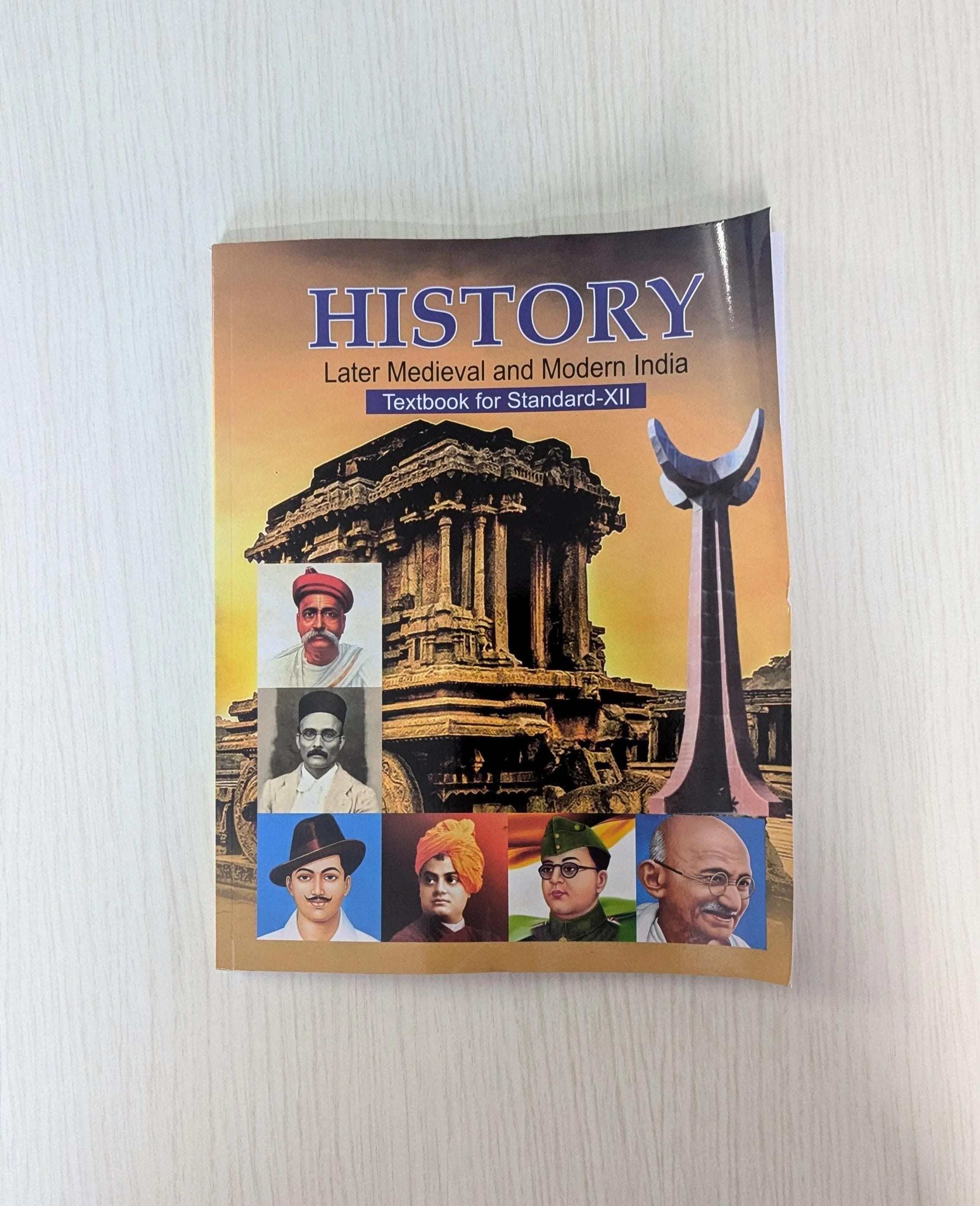
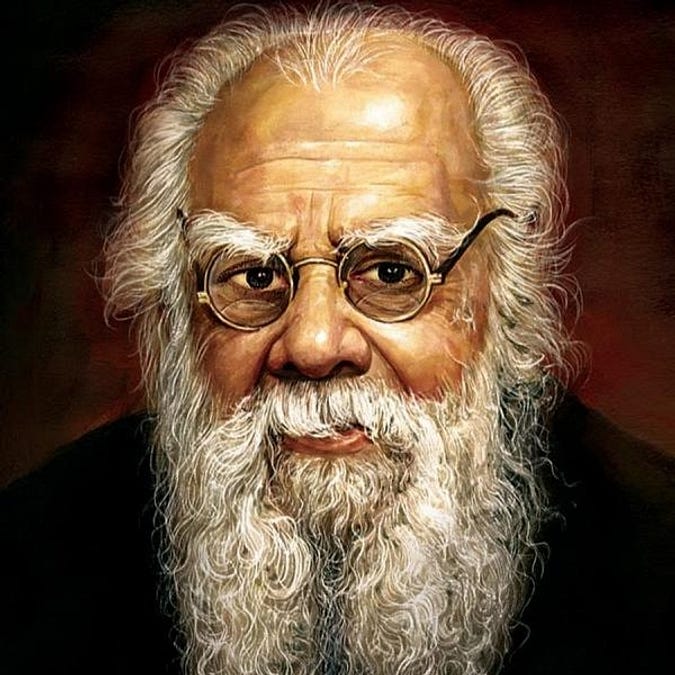
Meanwhile, mainstream leaders Gandhi, Nehru, Patel, Lohia etc are endlessly remembered. Not unimportant, but the ‘others’- Ambedkar, Phule, Periyar, Bhagat Singh were different, uncomfortable and refused to fit into the safe imagination of mainstream politics. That is why just maybe they were sidelined.
And the impact? Students grow up remembering only the mainstream. Memory gives them legitimacy embedding the ruling order into our very consciousness.
Rewriting and Manufactured Histories
Ironically, our textbooks have become battlegrounds. And to me personally, that is almost reassuring because I have always believed in democracy and abhorred violence, so yes, the pen is greater than the sword. But what exactly is being fought over?
Chapters vanish: Mughals, caste struggles, reformers, even Bhima Koregaon. Narratives get softened: Chitpavan Brahmins and the Peshwas, caste critiques watered down. Bhakti and Sufi movements are stripped of their radical political side and reduced to safe spirituality. Meanwhile, the Vedas are glorified as divine gifts but what about the brutal hierarchies they sanctified? What about the caste system, perhaps the most exploitative and ostracising system the world has ever known?
Partition is remembered too but in a selective way. The violence is retold again and again, almost fetishised. But the political blunders, the leadership failures? Silenced.
Now, some readers may ask: isn’t this simply ‘updating’ history? Can kids really grasp the nuance? Fair questions. But hiding is not teaching. Subtleties can be introduced gradually- their absence only leaves gaps that propaganda is quick to fill.
And let uss be very clear- I don’t buy the myth of a benevolent state. Orwell warned us long ago. The main purpose of rewriting history is not to educate, but to legitimise whoever sits in power.
That’s why I called it ominous earlier. Because erasure doesn’t just distort the past it erases resistance. Older generations shrug and say, “This is how it has always been.” And most of us, even the “educated,” only remember 1% of the uncomfortable figures who had so much to offer but were conveniently sidelined.
The result? Propaganda. Propaganda. Propaganda. Disguised neatly as history.
Romila Thapar put it: ‘The rewriting of history is not merely an academic exercise; it is a political act.’
Memory and Appropriation Today
I look at some of the ‘innovative’ ways this game of memory is being played today. During his lifetime, Ambedkar despite all his accolades and his rise as a major political leader was mocked, sidelined and even disrespected by mainstream parties. Today, the same mainstream garlands his statues while caste atrocities both overt and covert continue unchecked in villages and cities. The cloak has changed but not the reality.
Bhagat Singh? His posters are everywhere in Punjab across party lines. But let’s be honest- If Bhagat Singh were alive today with his fiery writings and radical methods he would probably be branded ‘anti-national’ and face the same draconian laws that silence student leaders now. Politicians are quick to commemorate but without any commitment.
This is the trick- radical figures are turned into safe icons. Roads, schemes and awards are named after them while their actual ideas are buried. Empty rituals replace the structural change that leaders like Ambedkar, Periyar and Bhagat Singh fought for.
And why doesn’t anyone question this? Simple. The state has already ‘honoured’ them. It becomes politically impossible to challenge these hollow gestures because the state can always say, “Look, we remember them!” Even if that memory is selective, distorted or completely against the grain of what those figures stood for.
The real danger lies here: it reshapes how society sees memory itself. People start mistaking memory for respect, not struggle. Human nature avoids discomfort, so the uncomfortable truths fade. Students grow up recognising the icons but never engaging with their ideas because teachers never raised those discussions in classrooms. What happens to questioning then? It gets diluted and emptied of any real substance just reduced to ritual and ceremony.
The real tribute to Ambedkar or Bhagat Singh isn’t garlands or posters. It is to keep alive the questions they asked- questions that still make power uncomfortable.

Comment guidelines
1. Be respectful and civil.
2. Stay relevant and add value.
3. No hate, harm or falsehoods.
4. Protect privacy and integrity.
5. Debate fairly, follow moderation.